

In offshore, naval, and port structures, a weld is not a detail: it is the point where the entire structure depends on a well-executed joint. Cyclic loads, vibration, saltwater, and temperature swings put every weld bead under far tougher conditions than in an ordinary metal shop - and a failure doesn\'t show up as a visual defect, it shows up as a crack that grows quietly until the worst possible moment.
That is why "certified welding" is not a sales label, it is a set of verifiable criteria. After more than a decade performing structural welding in critical environments, we put together this guide with what you should check before hiring a company for this kind of work.
WHAT "AWS-CERTIFIED" MEANS IN PRACTICE
The AWS (American Welding Society) publishes the codes and certifications most widely used in the welding industry, such as AWS D1.1, which covers structural steel welding. But "AWS-certified" is never a single stamp: in practice it involves two separate qualifications that must exist together.
The first is the procedure: each joint type, material, and welding position needs a specification (WPS) backed by a qualification record (PQR), with tests proving that method produces a weld of the required strength. The second is the welder: each professional must be qualified (WPQ) for the process, material, and position they will work in. Standards such as ASME Section IX and ISO 9606 follow the same qualification logic and are widely used offshore.
6 THINGS TO CHECK BEFORE HIRING
When evaluating a welding company, these are the points that separate a company that delivers a reliable weld from one that merely promises it:
Qualified Procedures (WPS/PQR)
Ask for the procedure specifications and qualification records for your project\'s material and joint.
Qualified Welders (WPQ)
An individual, in-date certificate for the process, material, and welding position in the scope.
Qualified Welding Inspector
A certified welding inspector, independent from whoever performs the work, following the critical stages.
Non-Destructive Testing (NDT)
A testing plan defined before execution, with a clear acceptance criterion for every joint.
Traceability and Documentation
Every joint identified, with a record of who welded it, with which procedure, and the test results.
Safety and Hot Work
Hot work permit, spark control, and proper PPE, especially in offshore environments and classified areas.
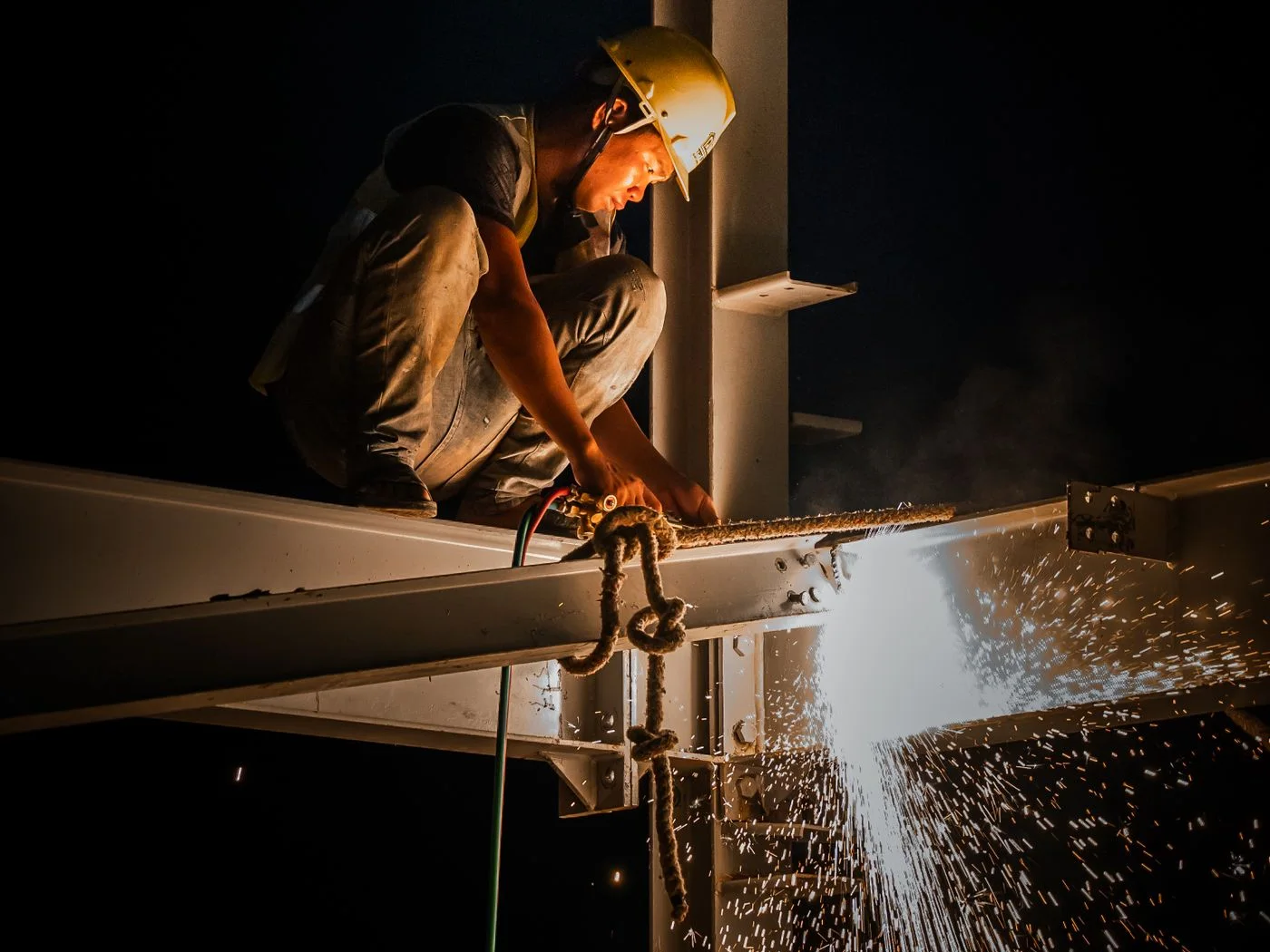
HOW A WELD IS VERIFIED: NON-DESTRUCTIVE TESTING
A weld can look perfect on the outside and still have a defect inside. That is why verification doesn\'t stop at the eye: non-destructive testing evaluates the joint without damaging it. The most common methods are:
- Visual inspection - the first and most basic step, done before, during, and after welding
- Dye penetrant - reveals cracks and pores that reach the surface
- Magnetic particle - detects surface and near-surface defects in ferromagnetic materials
- Ultrasonic - identifies internal defects such as lack of fusion and cracks inside the bead
- Radiography - records an image of the weld\'s internal condition, widely used on piping and vessels
COMMON MISTAKES WHEN HIRING WELDING
- Accepting a welder\'s certificate without checking validity and scope - qualification for one process or position doesn\'t automatically apply to another
- Not requiring the qualified procedure - a certified welder with an unqualified procedure is still a risk
- Choosing on lowest price alone - savings on inspection and testing usually turn into rework, or worse, a failure in service
- Leaving testing for the end - discovering a defect after the structure is finished makes the repair far more expensive
- No traceability - if something fails later, having no record of who welded it and how prevents root-cause analysis
WHERE CERTIFIED WELDING FITS IN A SHUTDOWN
In scheduled shutdowns of platforms and terminals, welding is usually one of the highest-risk work fronts and one with the biggest schedule impact - so having qualified welders and procedures in place before mobilization avoids delays and rework. We detail how to plan that kind of shutdown, from scope to day one, in the shutdown guide below.
CONCLUSION
Hiring certified welding means checking, item by item, that procedure, welder, inspection, and traceability actually exist - not just whether the company says it is certified. In structures that operate in harsh environments, that check is what separates a weld that lasts decades from one that needs repair ahead of schedule.
Frequently Asked Questions
The WPS (Welding Procedure Specification) is the welding procedure: process, material, position, parameters. The PQR (Procedure Qualification Record) is the record of the tests proving that procedure produces a weld with the required properties.
No. The qualification (WPQ) is specific to the process, material, and welding position the professional was tested for. A welder qualified for one scope is not automatically qualified for another.
AWS D1.1 is the code for structural steel welding. ASME Section IX covers procedure and welder qualification and is widely used for pressure vessels and piping. Both follow a similar logic, and the applicable code is set by the type of structure and the project specification.
It evaluates weld quality without damaging it, detecting surface and internal defects such as cracks, porosity, and lack of fusion. The testing plan must be defined before execution, with a clear acceptance criterion.
Because it lets you know, for each joint, who welded it, with which procedure, and what the test results were. If something fails in the future, that record is essential to investigate the cause and fix the problem.